18Jun 25
- Admin Web Papua
- Kamtibmas
- 3001 x dilihat.
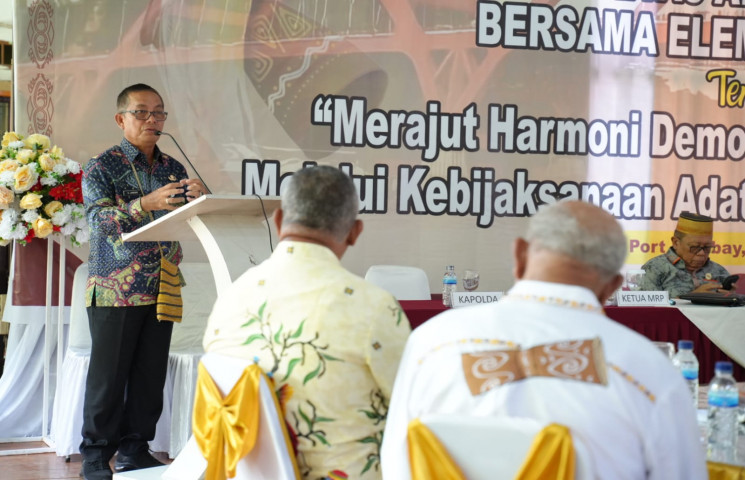
JAYAPURA – Acting Governor of Papua, Ramses Limbong, conveyed several key points during a gathering between traditional authorities and regional leadership forums (Forkopimda).
The event, organized by the Port Numbay Customary Council (LMA), was titled “Weaving the Harmony of Democracy and Development through Traditional Wisdom for Papua’s Future.”
Governor Ramses called on the ondoafi (customary leaders) to join in building a better future for Papua, emphasizing the importance of coordination in achieving that goal.
“From yesterday's discussions, it seems the main issue is a lack of communication. So we are trying to bridge that gap,” said Governor Ramses.
He also urged traditional authorities to recognize that customary law should not only be applied internally, but must also consider state (positive) law — for example, in the case of road or access blockades.
“Access blockades may be valid under customary law, but under positive law, they disrupt public order and other aspects. To avoid conflict, we need to find solutions that don’t interfere with public services or infrastructure,” he explained.
Ramses emphasized that the goal of the meeting was to bring about change, and he hopes the public can understand their roles and responsibilities, whether as customary landowners, traditional leaders, or government representatives.
“To develop Papua, there are customary land rights, traditional customs, government as facilitators, and the business sector. As has also been stated, in Papua we have three pillars: the customary system, the church, and the government,” he concluded. ***


