14Dec 25
- Admin Web Papua
- Digitalisasi
- 2499 x dilihat.

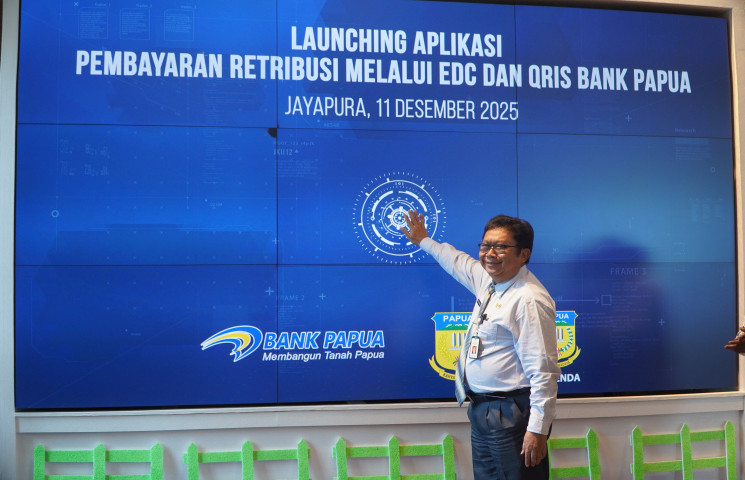
JAYAPURA – The Papua Provincial Government has begun implementing a digital system for regional levy payments through Bank Papua’s EDC machines and QRIS. This policy was launched as part of efforts to strengthen transparency in regional financial management and improve the quality of public services.
The launch of the non-cash payment system was carried out by the Assistant II of the Papua Regional Secretariat, Setiyo Wahyudi, in Jayapura on Thursday (December 11, 2025).
Setiyo explained that the digitalization of levy payments is an important step in building public trust in the regional government. Through a non-cash system, every transaction is recorded accurately, minimizing the potential for errors or discrepancies in payment amounts.
“Digital payments make the process more transparent, faster, and more accurate. The amount paid directly matches the obligation, without issues related to small change,” Setiyo said.
He added that the implementation of this system is also aimed at boosting Local Own-Source Revenue. With a payment mechanism that is easier and more transparent, the public is expected to become more compliant and comfortable in fulfilling levy obligations.
“This is part of the government’s effort to increase Local Own-Source Revenue. Digitalization is a significant leap, as nearly all transactions in the future will move toward non-cash systems,” he noted.
Meanwhile, Bank Papua’s Director of Operations, Isak Wopari, stated that this digital payment innovation aligns with the National Non-Cash Movement (GNNT) and supports Papua’s digital-based economic transformation agenda.
According to Isak, the collaboration between Bank Papua and the Papua Provincial Government holds strategic value in strengthening the region’s fiscal foundation. Digitalization enables real-time and accurate transaction recording while also enhancing public convenience in accessing services.
“The more transparent and efficient the levy payment system, the stronger the impetus for fiscal stability, the investment climate, and the welfare of the people of Papua,” he concluded. ***


