29Jan 26
- Admin Web Papua
- Kesehatan
- 2083 x dilihat.
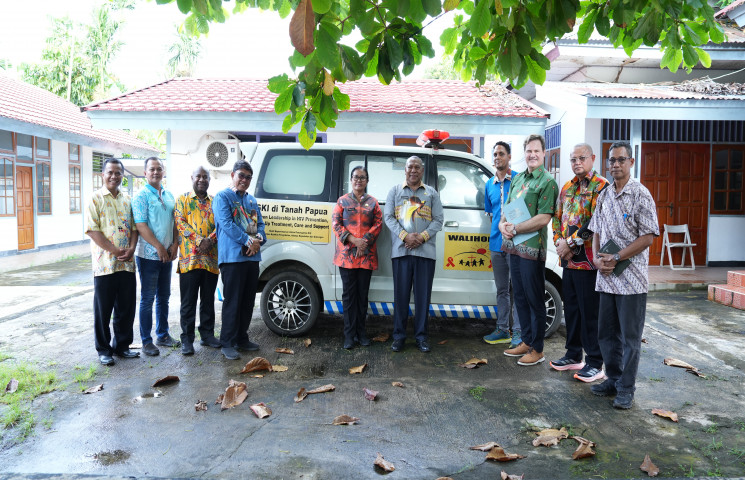
JAYAPURA — Papua Deputy Governor Aryoko Rumaropen, accompanied by assistants and related officials, conducted a field visit to Walihole Clinic in Yoka, a clinic for the treatment of People Living with HIV/AIDS that has been inactive for approximately two years due to issues related to the establishment of a legal entity. (29/1)
During the visit, the Deputy Governor expressed hope that Walihole Clinic in Yoka could resume operations, considering its highly strategic role in HIV care services in Papua. The Papua Provincial Government reaffirmed its commitment to supporting the reactivation of the clinic's services through institutional strengthening, improving human resource capacity, and providing support for facilities and infrastructure.
The existence of Walihole Clinic in Yoka is considered highly important, given that the number of HIV cases in Papua has now reached more than 24,000 people. Efforts to reactivate the clinic are also part of the Papua Provincial Government's commitment to realizing the Healthy Papua Mission, by ensuring sustainable and inclusive access to healthcare services for the community.
On the same occasion, the Head of the Papua Provincial Health Office, dr. Beeri Isach Sooren Wopari, explained that a clinic specifically focused on the treatment of people living with HIV/AIDS is greatly needed in Papua. According to him, with the availability of sufficient doctors and paramedical staff, along with continuous capacity and competency improvement, clinics such as Walihole Yoka will become an important solution for HIV treatment in Papua, alongside the various preventive efforts that the government continues to undertake.
The technical manager of Walihole Clinic in Yoka, Rumboi Werimon, explained that the clinic, which belongs to the Evangelical Christian Church in the Land of Papua, was established in 2010. During its period of operation, the clinic served nearly 200 patients living with HIV/AIDS each year, with significant results, as many AIDS patients recovered and went on to live independently as HIV survivors. The clinic's services covered infants, children, adult women and men, as well as married couples. The halt in the clinic's operations was caused by regulatory obstacles, even though it had previously received funding support from donors as well as the Papua Provincial Government and the Jayapura City Government.
Meanwhile, the Indonesia Education Partnership (IEP), one of the NGOs that has long supported human resource development in Papua and also took part in the visit, expressed its readiness to fully support the Papua Provincial Government's good intention to reactivate the operations of Walihole Clinic in Yoka. This support is expected to strengthen human resource capacity and ensure the sustainability of HIV care services in Papua. ***


