04Jul 25
- Admin Web Papua
- Kesehatan
- 4832 x dilihat.

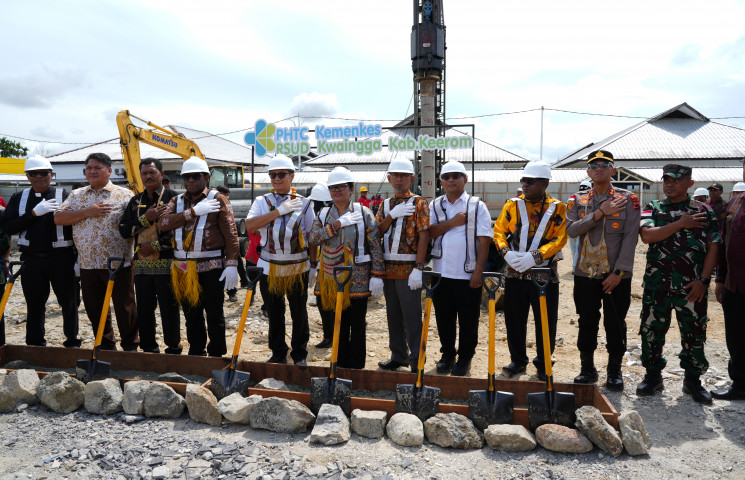
KEEROM – Acting Regional Secretary of Papua, Suzana D. Wanggai, representing the Acting Governor of Papua, attended the groundbreaking ceremony of the Best Fast Results Program (PHTC) for the improvement of RSUD Kwaingga in Keerom Regency, led by the Minister of Health of the Republic of Indonesia. (July 4)
The enhancement of RSUD Kwaingga Keerom involves an investment of IDR 124.3 billion and is being constructed on an area of over 2 hectares, with additional buildings covering more than 3,000 square meters. Keerom Regency was chosen due to its status as a 3T (disadvantaged, frontier, outermost) area and a strategic location on the border with Papua New Guinea (PNG), spanning a 150 km border line and covering an area roughly 10 times the size of Jayapura City.
In her speech, Acting Regional Secretary of Papua Suzana D. Wanggai expressed appreciation for the presence of the Minister of Health and the central government’s support in improving the quality of services at RSUD in Keerom. She stated that the upgraded RSUD Keerom, through the PHTC program, will strengthen Indonesia’s ties with PNG while also expanding healthcare access in the border region.
On the same occasion, Suzana expressed her hope regarding the recruitment of healthcare workers, emphasizing the need for affirmative action in favor of Indigenous Papuans, especially for specialist doctors. She urged that doctors, particularly those who have received scholarships from the central, regional, or Special Autonomy governments, should not be allowed to transfer out of Papua.
Meanwhile, Minister of Health Budi Gunadi Sadikin emphasized that the improvement of RSUD is part of the current administration’s commitment to realizing President Prabowo Subianto’s Asta Cita vision, particularly in the health sector. He stated that hospitals included in the PHTC program will be equipped to treat the five leading causes of death in Indonesia: hypertension, diabetes, stroke, cancer, and kidney failure.
In addition to infrastructure and medical equipment, the central government is also opening wider access to specialist medical education and calling for local governments’ support in encouraging Indigenous Papuans to become doctors and specialists. He also highlighted the importance of providing proper incentives for healthcare workers and improving hospital management to meet professional and standardized levels.
The enhancement of RSUD Kwaingga Keerom is expected to accelerate access to quality healthcare services for communities in border areas and serve as a symbol of the state’s presence in the country’s outermost and frontier regions. ***


